
Occasion Guide · 6 min read
Sangeet and Mehendi Outfit Fabrics: The Complete Guide
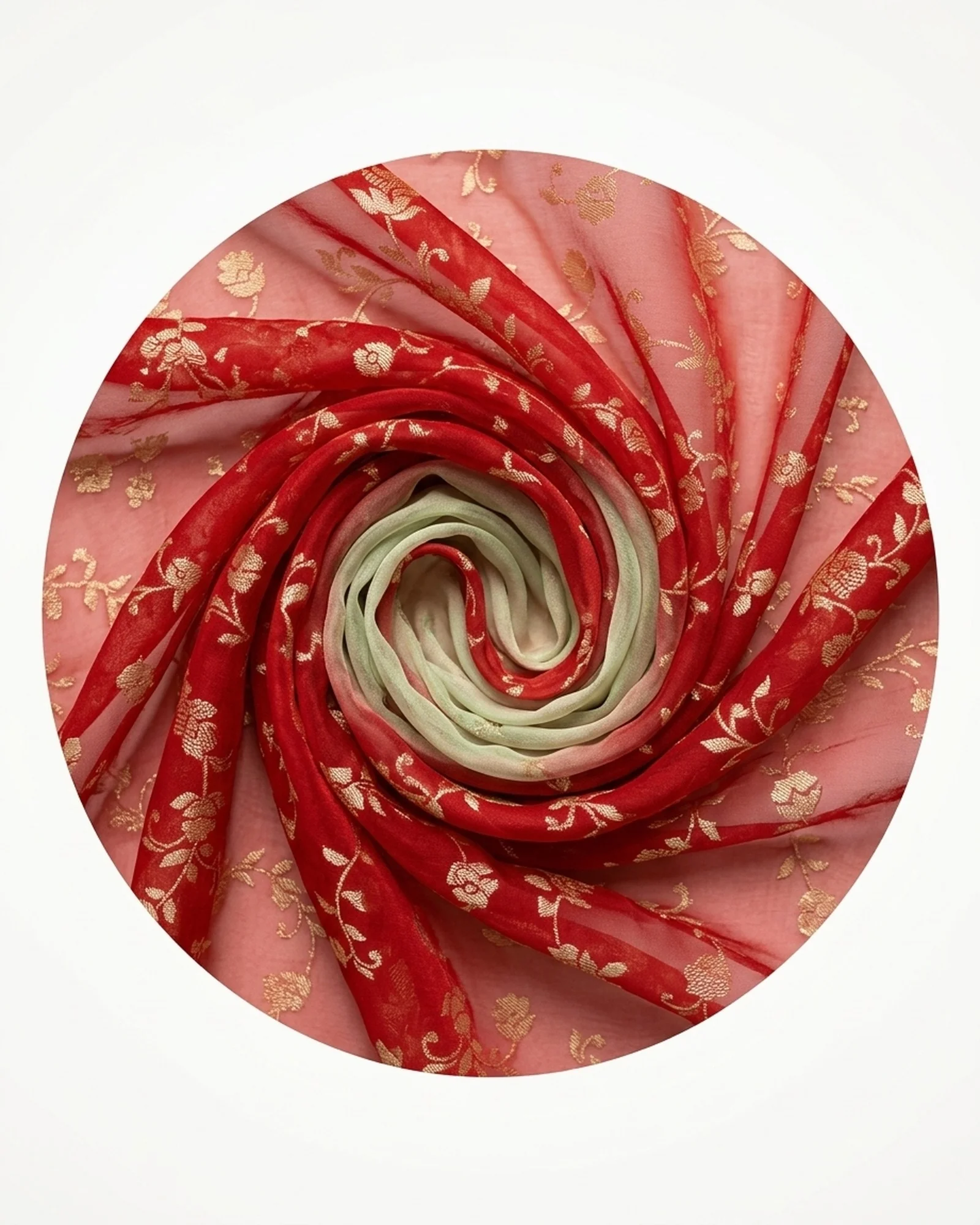
Wedding weeks run on two very different energies. Mehendi is daylight, courtyard and comfort, while the sangeet is lights, choreography and shine. Dressing for both from one festive fabric online order is entirely possible if you plan the fabrics by mood rather than by colour alone. The fabrics you choose in month one decide how comfortable you are in month six, so it pays to think one function ahead.
The secret is to decide the metreage and the weaves together. Daylight outfits need fabric that sits through long hours while henna dries; evening outfits need movement, stretch and sparkle under stage lights. Get both right and you have two outfits that carry the week.
Two functions, two moods
The daylight function
Mehendi happens in courtyards, under canopies, often in the afternoon. It asks for breathable weaves, soft colours and silhouettes you can sit cross-legged in - shararas, layered skirts, easy kurtas. Anything stiff or heavily beaded becomes a nuisance within the first hour. Keep the guest list in mind too, because a courtyard function with fifty people feels very different from one with two hundred.
The evening function
The sangeet is an evening production, so the fabric needs to move with the choreography. Look for fluid weaves that flare, stretch or drape, and shine that reads well on video. This is the one function where sequins and metallic threads earn their place.
Daylight fabrics that survive the day
Cotton, mulmul, chanderi and light crepe are the daytime workhorses. They breathe, they do not trap heat, and they release henna stains more easily than delicate silks. Printed florals and soft greens are the classic mehendi palette, though pastel pinks and yellows work just as well.
If you are buying festive fabric online for the daytime function, favour prints over embroidery and machines over hand work. A printed lehenga or a floral sharara set looks perfectly festive, costs less, and survives the courtyard, the lunch and the inevitable photo session in the garden. Cotton blends and hand-block prints are also easier to tailor in a hurry, which matters when a function is days after the order arrives.
Dance-floor fabrics that catch the light
For the dance floor, georgette is the first name on the list. It swirls, it does not wrinkle between performances, and it takes embroidery, sequins and mirror work without turning rigid. A sequin-work georgette lehenga or a flare-heavy anarkali in satin georgette is the classic silhouette for the evening.
Sequins are best used with restraint - one shimmering element, not the whole outfit. A sequin blouse with a plain skirt, or a shimmering dupatta over a solid base, gives you the stage sparkle while keeping the fabric comfortable enough for a full evening of dancing. Check the inner lining too, because a rough lining under any sparkle will irritate through a long performance.
Weaves that work for both functions
Georgette
The most versatile wedding-season weave there is. Light enough for an afternoon function, dramatic enough for the stage, and it layers beautifully with lining and cancan.
Chanderi and cotton silk
For haldi mornings and courtyard events, chanderi and cotton-silk give a quiet festive sheen without heat. They hold block prints and embroidery well, and they are easy to tailor into structured and flared shapes.
Metallic mesh and shine
Use these as accents - a border, a dupatta, a cuff - rather than full-length fabric. They bring the stage shine, but they need a soft base fabric underneath to drape well and stay comfortable.
Colour and coordination for the wedding week
Wedding weeks look best when the colours relate. Pick a family palette - ivory, sage, blush and gold never fail - and let each function shift within it. The mehendi can carry the lighter end of the palette, while the dance night takes the deeper, shinier shades. When you buy festive fabric online, save the palette to your notes so every later order matches.
Dupattas are the easiest way to coordinate without matching exactly. A shared dupatta shade across cousins, or a common border colour across family outfits, makes group photographs look intentional. If you are shopping festive fabric online for several people, order everything in one go so the shades are cut from the same lots.
How much fabric and how to order
- A mehendi sharara set: 4 to 5 metres including dupatta.
- A sangeet lehenga: 5 to 7 metres with blouse and dupatta.
- A sangeet anarkali: 4 to 5 metres at 44-inch width.
- Order lining and cancan with the main fabric in one festive fabric online order.
- Shop festive fabric online at least four weeks before the wedding week.
Festive fabric online at Saroj Ensemble
Saroj Ensemble stocks crepe, chanderi, satin georgette and embroidered fabrics by the metre, with honest weight and care notes on every listing, delivered across India. Buy festive fabric online for the whole wedding week, or visit any of our five Mumbai stores for a hands-on colour match.
Mumbai shoppers can shortlist festive fabric online during the week and then feel the drape at the nearest Saroj Ensemble store on the weekend. With the right weaves planned for each function, the wedding week becomes something to enjoy rather than manage.